

Road closure decisions that actually save time, money, and headaches
When a road closure is needed for an event, construction site, or public works project in Ottawa, the stakes are high. Misunderstandings about permits, equipment, staffing, and traffic impacts lead to delays, fines, and frustration for contractors, municipalities, and event teams. Clearing up common misconceptions helps teams plan faster, meet compliance, and reduce disruption for residents in Ottawa, Nepean, Kanata, Orleans and surrounding communities.
Myths that trip up event and construction teams — and what’s really true
Below are the four myths most commonly repeated by planners and contractors. Each item explains the misconception and provides the straightforward fact you need to make better decisions on temporary road closures.
- Myth 1: The city handles everything — you don’t need to prepare a Traffic Control Plan. Many teams assume municipal staff will manage routing, signage, and approvals. In reality, project owners or event organizers are typically responsible for submitting Traffic Control Plans and securing permits. A well-prepared plan prevents delays and shows municipal authorities you’ve addressed safety and traffic flow.
- Myth 2: Any barricade will do — barricades alone are enough for crowd and traffic control. Temporary barriers are essential, but the right mix matters. Crowd control barricades, stage barricades, concrete blocks, and temporary fencing each serve different roles. Without trained barricade attendants, clear signage, and perimeter design, barriers can fail to control vehicle access and pedestrian flow.
- Myth 3: Road closures always cause severe, unavoidable traffic backups. Closures that are planned with routing alternatives, staggered timing, and clear signage minimize congestion. Proper staging and targeted closures—combined with parking control and communication—often reduce the community impact compared with ad-hoc measures.
- Myth 4: Site hardening and security are optional extras for short closures. Theft, vandalism, and unauthorised access can happen quickly. Temporary access control, fencing, and security-focused site hardening reduce the risk of incidents that can extend project timelines and increase costs.
How Ottawa teams avoid those pitfalls: practical steps that work
Debunking myths is only useful when paired with practical steps. Ottawa event planners and contractors can follow a clear checklist to get approvals, protect the site, and keep traffic moving.
- Create a Traffic Control Plan early. Start planning at least weeks before the closure date. Include detailed routing, detours, signage locations, placement of concrete blocks and barricades, and contact details for on-site supervisors.
- Choose barrier types for the job. Use crowd control barricades for pedestrian flow, stage barricades for front-of-stage protection, and temporary fencing for perimeter security. Concrete blocks are useful for vehicle-rated closures where greater protection is required.
- Staff the closure with trained labour. Barricade attendants, traffic control personnel, and site hardening specialists help enforce closures, answer public questions, and coordinate with municipal officers when needed.
- Coordinate permits and approvals. Submit the Traffic Control Plan to the relevant municipal authority for review. Confirm timing windows, noise restrictions, and any additional requirements for the affected neighborhoods in Ottawa, Nepean, Kanata or Orleans.
Four real-world examples of myth-driven problems — and the fixes that prevented them
Seeing how myths play out on actual jobs helps teams avoid the same mistakes. Here are concise scenarios that Ottawa teams face regularly, and the effective solutions that ARX Fencing and Logistics applies.
- Scenario: A festival assumes roadside signage is enough. Problem: Pedestrians and cyclists enter the event perimeter through gaps in poorly positioned barricades, creating safety hazards and liability exposure. Fix: Use a layered perimeter with crowd control barricades, privacy screening where needed, and trained barricade attendants to manage entry points. Combine with a Traffic Control Plan that identifies pedestrian detours.
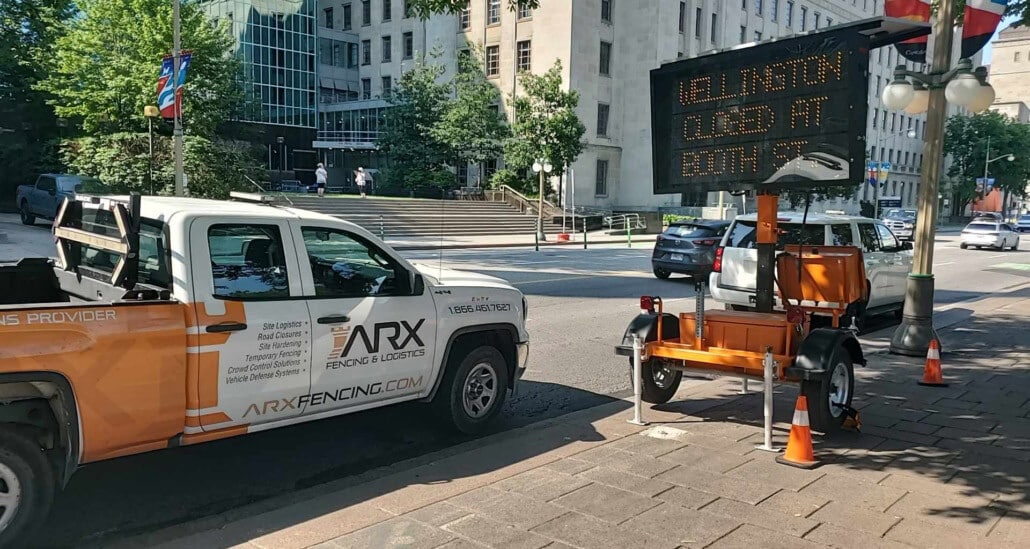
- Scenario: Contractors close a lane for equipment delivery without advanced planning. Problem: Unexpected closures during rush hour create backups and complaints from local businesses. Fix: Plan deliveries outside peak times, communicate with nearby stakeholders, and deploy temporary traffic control measures such as signage, flaggers, and temporary lane markers per the Traffic Control Plan.
- Scenario: Short-term road closure leaves a construction site vulnerable overnight. Problem: Theft of materials and vandalism delay the project and raise insurance costs. Fix: Apply site hardening measures — temporary construction fencing, concrete blocks for vehicle-rated areas, and monitored access points to reduce unauthorised entry.
- Scenario: An event relies only on municipal closures and is surprised by additional permit requirements. Problem: Last-minute permit requirements force changes that increase costs and reduce time for setup. Fix: Engage early with municipal reviewers and include all expected permit conditions in the Traffic Control Plan. Use experienced partners who understand Ottawa’s approval processes to streamline submissions.
Checklist: what to include in your Ottawa road closure plan
Having a clear checklist prevents missed items and helps teams move from planning to execution smoothly. Use this as a working list whenever you are preparing a temporary road closure in the National Capital Region.
- Detailed Traffic Control Plan with maps, detour routing, signage schedules, and staging diagrams.
- List of barrier types required: crowd control barricades, stage barricades, temporary fencing (4 ft, 6 ft, 8 ft as needed), and concrete blocks when vehicle-rated closures are necessary.
- Staffing plan: barricade attendants, traffic control personnel, and on-site supervisors with contact numbers.
- Permit and municipal submission timeline aligned with the municipality’s review window (plan for revisions).
- Site hardening and security measures for overnight or multi-day closures.
- Communication plan for local businesses, residents, and emergency services including advance notice and signage.
How equipment choices affect safety and compliance
Not all temporary equipment is interchangeable. Making the right choice reduces risk and keeps projects within municipal standards.
- Crowd control barricades are ideal for managing foot traffic, defining queuing lines, and guiding attendees across sidewalks and plazas.
- Stage barricades are engineered for high-compression crowd loads at front-of-stage zones and festival sightlines.
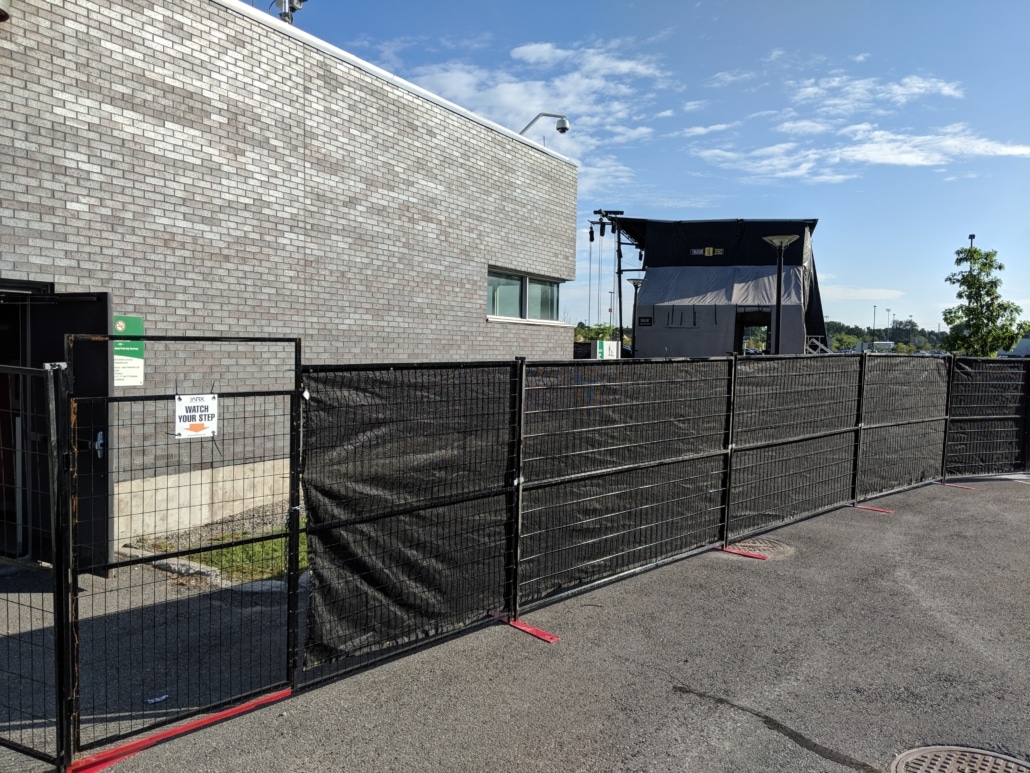
- Temporary fencing (4 ft to 8 ft) creates durable perimeters for construction sites or event back-of-house areas and supports privacy screening where required.
- Concrete blocks provide vehicle-rated protection and anchor points for fencing in situations where vehicle access must be prevented or limited.
Getting approval faster: tips tailored to Ottawa, Nepean, Kanata, and Orleans
Municipal processes in Ottawa and surrounding communities move faster when submissions are clear, complete, and show consideration for local traffic patterns and community impact. Use these targeted tips to smooth the approval path.
- Provide time-of-day plans that avoid peak commute hours when possible. Shorter, well-timed closures reduce community impact and improve municipal acceptance.
- Include contact information for the on-site supervisor who will be available during the closure; municipalities often want a single point of contact.
- Demonstrate how emergency vehicle access will be maintained and communicate those plans to local fire and EMS when required.
- Show how parking control and pedestrian routing will be handled for nearby businesses and residents, especially in areas like Kanata and Orleans with mixed commercial and residential streets.
Final practical guidance to make road closures predictable and safe
Road closures do not need to be a source of anxiety. With the right mix of planning, equipment, trained labour, and local knowledge, event and construction teams can reduce delays, comply with municipal requirements, and protect the public and site assets. Prioritize an early Traffic Control Plan, choose barriers that match the risk, and staff closures with trained attendants. Doing so saves time and money and helps you maintain good relationships with residents and city officials across Ottawa, Nepean, Kanata, Orleans and surrounding communities.
—
Work with ARX Fencing and Logistics to handle road closures the right way
ARX Fencing and Logistics brings hands-on experience with road closures, site logistics, event operations, and site hardening across Ottawa and the surrounding area. Our team supplies crowd control barriers, stage barricades, temporary fencing in multiple heights, concrete blocks, trained barricade attendants, and Traffic Control Plan support tailored to local permitting processes. If you need a reliable partner to plan and execute a road closure that protects your site and minimizes community impact, contact ARX Fencing and Logistics to get a free estimate and practical guidance specific to Ottawa, Nepean, Kanata, Orleans and surrounding communities.