

When an audience gathers in front of a stage, the space can change quickly. A calm crowd may become tightly packed when a performer appears, a popular song begins, or people move toward a better view. Stage barricades give event planners a dependable way to create separation between attendees and the performance area while helping staff manage movement at the front of the crowd.
For Ottawa festivals, concerts, special events, and other public gatherings, stage barricades are not simply a visual boundary. They are part of a larger crowd-flow plan that can include pedestrian barriers, controlled access points, line management, trained attendants, and practical site logistics. The right setup helps performers, staff, security teams, and guests understand where they should be and how movement should take place.
Below are nine common questions about stage barricades in Ottawa, with clear answers for event organizers who want a safer, more organized front-of-stage area.
Questions 1 to 3: How Stage Barricades Shape the Front-of-Stage Area
The area directly in front of a stage requires careful planning because it often receives the greatest concentration of people. Stage barricades help define this space and provide a strong physical separation between the audience and the stage edge. They also give event teams a clear reference point for monitoring crowd density and movement.
1. What is the main purpose of a stage barricade?
A stage barricade creates a secure separation between performers, production areas, staff, and attendees. Heavy-duty stage barricades are designed for front-of-stage crowd management, where the audience may be standing close together and moving with the energy of the performance.
The barricade can help reduce direct access to the stage, protect equipment and working areas, and give authorized personnel a defined zone between the stage and the audience. It also provides a consistent physical boundary that is easier for staff and guests to understand than an informal line or temporary marker.
A stage barricade may support several operational goals at once:
- Separating performers and staff from attendees.
- Creating a defined front-of-stage audience area.
- Helping staff observe crowd movement and density.
- Supporting an organized response when people need assistance.
2. Are stage barricades the same as crowd control barricades?
No. Both products can help organize people, but they are intended for different uses. Crowd control barricades are reliable pedestrian barriers used for directing foot traffic, managing queues, restricting access, and maintaining organized event or work zones. They are well suited to entrances, pathways, lines, and general pedestrian separation.
Stage barricades are designed specifically for front-of-stage crowd management. The demands at a stage can be different from those at a registration area or queue. Audience members may be standing close to one another for an extended period, and the barrier must create a strong, clearly defined separation between the stage and the public.
Some Ottawa events may use both products. Stage barricades can protect the performance edge, while crowd control barricades guide guests through entrances, exits, queues, VIP areas, and other parts of the event site. Selecting the right product for each location helps create a more complete crowd-flow plan.
3. Where should stage barricades be placed?
Stage barricades are generally positioned along the front edge of the stage or performance area, leaving enough room for performers, staff, and operational access. The exact placement depends on the stage layout, audience size, access requirements, sightlines, and the way people are expected to enter and leave the viewing area.
Placement should be considered as part of the entire event perimeter rather than as an isolated equipment decision. The barrier should connect logically with nearby fencing or pedestrian barriers, without creating confusing dead ends or narrow points where people may bunch together.
Before installation, event teams should review:
- The width and shape of the stage or performance area.
- Staff and emergency access requirements.
- Audience entry and exit routes.
- Nearby fencing, queues, VIP areas, and restricted zones.
A practical layout gives attendees a clear route to the viewing area and gives staff enough room to monitor the front-of-stage zone. Site logistics planning is especially important when the event takes place in a busy Ottawa public space or alongside other temporary structures.
Questions 4 to 6: Crowd Flow, Sightlines, and Access
Good crowd flow is about more than keeping people away from the stage. It is also about helping people move through the event without unnecessary confusion. A well-planned barrier arrangement supports clear routes, visible boundaries, and controlled access while preserving the experience that guests came to enjoy.
4. How do stage barricades improve crowd flow?
Stage barricades improve crowd flow by giving people a clear visual and physical limit. Without a defined front-of-stage boundary, attendees may move forward unevenly, press into working areas, or block routes used by staff. A properly positioned barricade helps establish where the audience should stand and where the performance operation begins.
Stage barricades work best when combined with a broader event operations plan. Crowd control barricades can guide guests toward the correct entrance, separate queues, and keep pedestrian movement away from equipment or restricted areas. Temporary fencing can define larger event perimeters, while trained barricade attendants can help people understand where to go.
Practical crowd-flow benefits include:
- More predictable movement toward and away from the stage.
- Less confusion around staff-only and restricted areas.
- Clearer routes for guests, performers, and event personnel.
- Better visibility for teams monitoring the audience.
Every event has different conditions. A compact community event may need a simple stage separation, while a larger Ottawa festival may require connected barriers, multiple access points, queue management, and traffic support. The layout should match the expected attendance and the physical site.
5. Can stage barricades protect performer and staff access?
Yes. One of the central purposes of a stage barricade is to maintain a defined separation between the public and the people working in or around the performance area. This can help keep performers, event staff, production personnel, and equipment away from uncontrolled audience movement.
Access planning remains essential. A barricade should not block the routes that authorized personnel need to use, and staff should know which access points are available. Event organizers may need to plan separate movement paths for performers, staff, service personnel, and guests, depending on the site.
It is also important to avoid treating the barricade as a substitute for complete event planning. The barrier is one part of the physical setup. Staff assignments, communication, line management, and site logistics all contribute to keeping access organized. ARX Fencing and Logistics supports event operations with practical fencing, barricade, crowd-flow, and logistics solutions tailored to the needs of Ottawa-area events.
6. How can barricade placement preserve sightlines?
Stage barricades should define the audience area without creating unnecessary visual obstruction. Their placement should account for the stage edge, speaker or equipment positions, the expected viewing area, and the location of staff who need to monitor the crowd.
Clear sightlines help in several ways. Guests can see where the front boundary is located, staff can observe the audience more easily, and performers can maintain a better connection with the people in front of the stage. A barrier that is positioned too far forward, too far back, or at an awkward angle may create congestion or reduce the usable viewing area.
Event planners should review sightlines from more than one position, including:
- The centre of the audience area.
- The sides of the viewing area.
- Staff positions behind or beside the barricade.
- Approach routes used by guests entering the space.
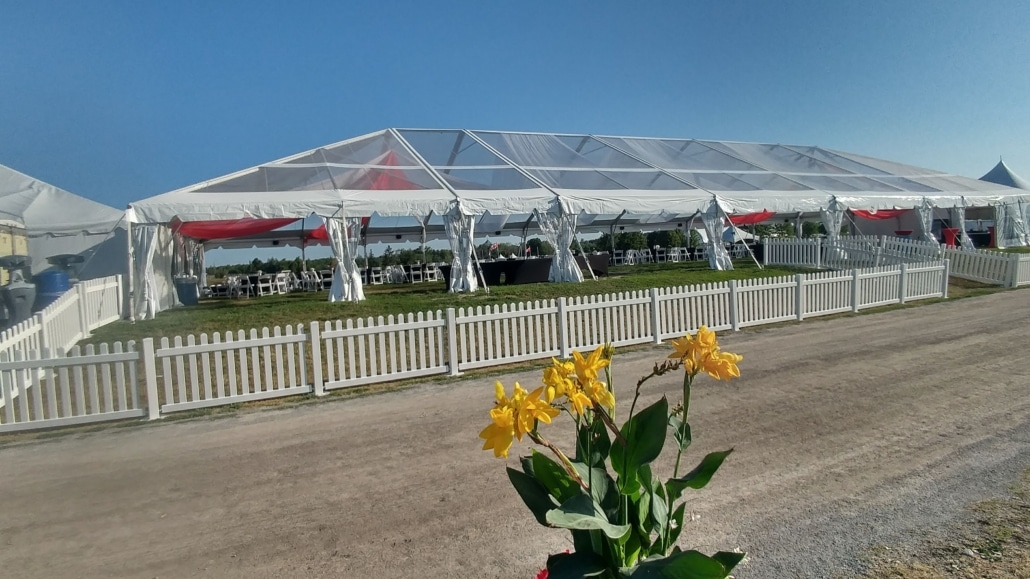
For events with VIP fencing, white picket fencing, or other defined zones, the visual appearance of the full perimeter also matters. The site should feel organized without making guests unsure about where they may walk or stand.
Questions 7 to 9: Planning an Ottawa Stage Barricade Setup
Stage barricades are most effective when selected and installed before the event begins. A rushed setup can create gaps, blocked access points, poorly connected barriers, or a layout that does not match the way guests actually move through the site. Early planning gives event teams more time to review the site and adjust the design.
7. What should Ottawa event planners consider before renting stage barricades?
Start with the event format, expected attendance, stage dimensions, audience arrangement, and the surrounding site. The right quantity and layout depend on whether the audience is standing, moving through a festival area, gathering for a concert, or using several activity zones.
Planners should also consider the duration of the event and the conditions around the stage. A barrier may need to connect to temporary fencing, crowd control barricades, VIP fencing, or other access-control products. If the event includes queues, parking areas, restricted zones, or road-related logistics, those elements should be reviewed together rather than planned separately.
A useful planning checklist includes:
- Stage length and front-of-stage configuration.
- Expected crowd size and audience behaviour.
- Guest entrances, exits, and queue locations.
- Staff access and monitoring positions.
- Connection points with other fencing or barricades.
- Delivery, setup, adjustment, and removal requirements.
ARX Fencing and Logistics helps Ottawa event teams assess practical fencing and logistics needs so the equipment supports the site plan instead of creating new obstacles.
8. Do stage barricades work for smaller events?
Yes. Stage barricades are not limited to the largest festivals. Smaller concerts, community events, private gatherings, and special events may also benefit from a clearly defined separation between a performance area and the audience.
The scale of the setup can change, but the planning principles remain the same. Guests need to know where they may stand, performers need a defined working area, and staff need a practical way to monitor movement. A smaller event may use fewer barricades or a more compact configuration, while a larger event may require a longer front-of-stage line and additional pedestrian barriers elsewhere on the property.
A right-sized setup avoids two common problems. Too little equipment can leave unclear boundaries and uncontrolled access. Too much equipment can make the site feel unnecessarily restricted or reduce useful space. Matching the setup to the event helps maintain a welcoming guest experience while supporting organized operations.
9. Who can help coordinate stage barricades and crowd-flow equipment in Ottawa?
Event organizers can work with a fencing and logistics provider that understands how temporary barriers fit into a complete event site. ARX Fencing and Logistics provides stage barricades, crowd control barricades, temporary fencing, VIP fencing, white picket fencing, privacy screening, concrete blocks, and other listed fencing and site logistics products for Ottawa-area needs.
Support may involve reviewing the event layout, identifying access and separation requirements, coordinating equipment, and considering how the stage area connects with queues, perimeters, restricted zones, parking control, and traffic support. The goal is not simply to place barriers in a line. It is to create a practical arrangement that works for guests and staff throughout the event.
ARX Fencing and Logistics serves Ottawa and surrounding communities, including Nepean, Kanata, and Orleans. For event teams, professional planning can reduce last-minute confusion and help ensure that the selected products match the real conditions of the site.
A Clear Stage Plan Supports a Better Event Experience
Stage barricades help event organizers manage one of the most active areas on a property: the space directly in front of the performers. They create separation, support access control, improve crowd visibility, and give attendees a clear understanding of where the audience area ends. Their value increases when they are connected to a broader plan for entrances, queues, exits, temporary fencing, staff movement, and site logistics.
For Ottawa festivals, concerts, and special events, the best setup is one that fits the venue, expected audience, stage design, and operational requirements. A thoughtful layout can protect the performance area without making the event feel difficult to navigate. It can also help staff respond more effectively when crowd movement changes during the event.
Whether the site is in Ottawa, Nepean, Kanata, Orleans, or a surrounding community, stage barricades should be treated as part of the event design from the beginning. The right equipment and a practical placement plan help create a more organized experience for performers, staff, and guests.
—
Plan Your Ottawa Stage Barricade Setup With ARX Fencing and Logistics
ARX Fencing and Logistics helps event organizers create secure, organized, and practical event spaces across Ottawa and the surrounding area. From heavy-duty stage barricades for front-of-stage crowd management to crowd control barricades, temporary fencing, VIP fencing, white picket fencing, privacy screening, and concrete blocks, our products support clear boundaries and controlled movement.
Our event operations and site logistics experience can help you think through stage separation, guest flow, queues, access points, restricted zones, and the connection between the performance area and the rest of the site. We also support broader event needs involving parking control, traffic support, barricade attendants, and trained labour where appropriate to the project.
If you are planning a festival, concert, special event, or public gathering in Ottawa, Nepean, Kanata, Orleans, or a nearby community, contact ARX Fencing and Logistics to discuss your stage barricade and crowd-flow requirements. A well-planned barrier setup gives your team a stronger operational foundation and gives guests a clearer, more comfortable event experience.